
Deck & Fence Staining
Deck and Fence Staining for Charlotte Homes
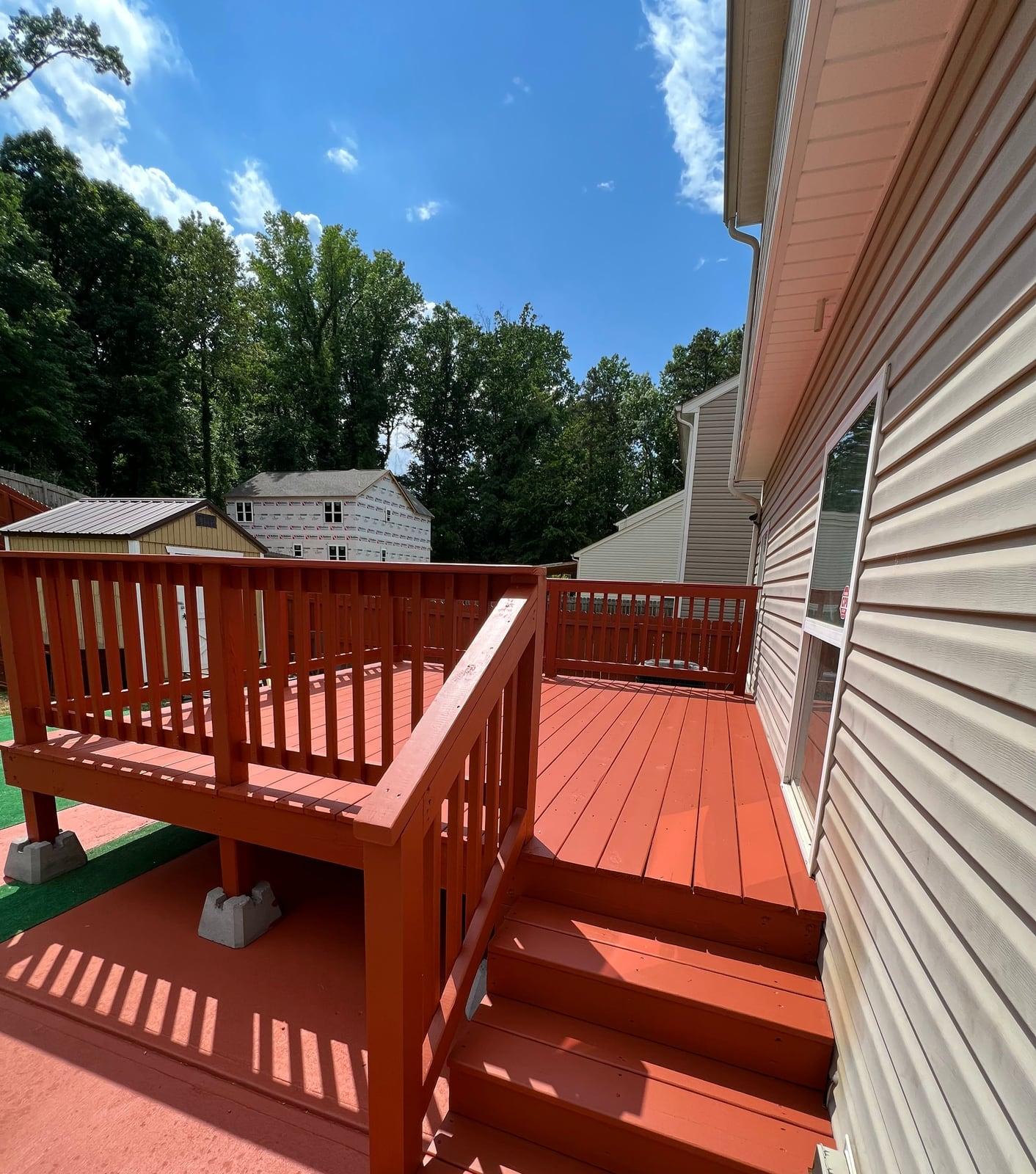
Deck and fence staining in Charlotte NC covers deck boards, railings, stairs, pergolas and wood or vinyl fencing. We clean and brighten the wood, sand the rough spots, read moisture, then coat. Free written estimate.
Residential & Commercial Painting in Charlotte, NC
What Deck & Fence Painting includes
Every horizontal board takes sun, rain and foot traffic, so decks wear faster than any other painted surface on your property. Here is the scope we work through.
Deck boards washed, brightened and coated with the grain
Railings, balusters and post caps coated on every face
Stair treads, risers and stringers coated for foot traffic
Pergolas, arbors and porch framing coated overhead and underneath
Wood privacy and picket fencing stained on both sides
Vinyl fencing soft washed, and painted only where the surface allows
Surface prep: mildew wash, wood brightener, sanding of rough boards
Moisture readings on the boards before any stain or sealer goes down
How the work goes
How Deck & Fence Painting Works
The sequence on a deck is fixed by how wood takes a coating, not by what is convenient.
Walkthrough and written scope
We walk the deck and fence line, probe soft boards, check loose fasteners and popped nails, and write the scope with the coating type named. You know what is coated and what needs carpentry first.
Clean and brighten
We wash off mildew, pollen film and gray surface fibers at controlled pressure, then apply a wood brightener. Stain has to soak into open wood, and a dirty or weathered face blocks it.
Repairs and fasteners
Split or rotted boards get replaced, protruding screws and nails get reset, and splintered edges get cut back. Coating a failing board only hides the failure for one season.
Sand and check moisture
We sand raised grain and rough boards so the surface stops splintering and takes stain evenly, then read moisture. Wood that is still wet inside will push the new coating back off.
Stain or coating applied
We coat boards full length, work the stain into the gaps between them, and seal cut ends and end grain where water enters first. Coat count follows the product and how thirsty the wood is.
Walkthrough and cleanup
We pull masking off siding, posts and plants, sweep the deck and grade, and walk it with you for missed spots. We also tell you when furniture can go back on.
Materials we use
Decks get a penetrating stain rather than a film-forming paint, because a horizontal board holds standing water and a film on top of it eventually peels in sheets. Semi-transparent stain lets the grain show and wears by fading, which makes the next recoat a wash and a coat. Solid-color stain hides gray, weathered wood and old coatings, and it is the honest choice on a deck that has already been coated several times.
Cleaning products do real work here. A mildewcidal wash kills the growth on shaded north-facing boards instead of just rinsing the color off it, and an oxalic-acid brightener pulls out the gray and the rust rings left by fasteners so the stain color reads true. On fences, we keep pressure low enough to avoid furring soft pine. Cut ends and fresh saw cuts get sealer, because end grain drinks water many times faster than a board face.
Sheen barely matters on a deck; absorption does. Flat penetrating finishes stay non-slip underfoot, while a glossy film gets slick when wet. Railings, post caps and pergola framing are vertical or sloped, so they can carry a solid stain or an exterior enamel that holds color longer against sun. Two coats on vertical woodwork buy even color and a thicker film where rain runs. On deck boards, we apply what the wood accepts without leaving a sticky surface.
What affects the price
Every project is different, so we quote after a walkthrough rather than guessing over the phone. Here's what generally moves the price and schedule:
Square footage of decking, plus railing and baluster count, which drive labor more than deck area
Condition of the wood: gray, furred or previously peeling boards need more cleaning and sanding
Board and rail replacement volume, since carpentry is priced separately from coating
Stair count, raised decks and screened enclosures that slow access underneath and overhead
Switching from semi-transparent stain to solid color, which adds coats and prep
Fence linear footage, whether both sides are coated, and gates, lattice or shadowbox detail
Recent Work
Deck & Fence Painting projects from around Charlotte, NC
Service Area
Serving Charlotte, NC and the surrounding area
We're based in Charlotte, NC and take on deck & fence painting projects throughout Ballantyne, Charlotte, Concord, Gastonia, Huntersville, Indian Trail, Lake Norman, Matthews, Mint Hill, Monroe, Mooresville, Pineville, Rock Hill, SouthPark, Statesville, Waxhaw, and Weddington. Not sure if you're in range? Reach out and ask.
FAQ
Common questions about deck & fence painting
Start Your Project